


The History of Library Cards
The History of Library Cards
Written by Yesica Perez November 10, 2026
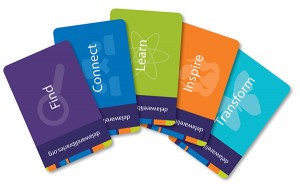
Libraries serve as a hub to get all your information for free. They have over thousands of books for you to choose from, many genres such as graphics, fiction, non-fiction, children’s books, etc. When you go to a library and want to check out the book you want, you must have a library card. All libraries require people to have a card or to sign up for one when wanting to check out a book or use some of the resources that they have. Of course, this is all free so why should you have a card? And why is it important?
Introduction
When libraries were first introduced, library cards didn’t exist. In fact, the earliest libraries were non circulating, meaning that they did not check out books to people because they stayed in the buildings. It wasn’t until the 18th century when public and membership libraries used cards to keep track of those who were permitted to take library books. Although public libraries did exist, which would have allowed people to get free access to the books and resources they had to offer, they would not last long due to limited fundings.
System
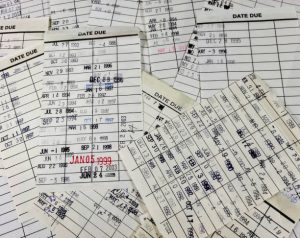
Before there were library cards there was the Cumbersome Ledger System, where libraries would have patrons log onto heavy handwritten paper. The page would have consisted of the patrons’ name, due date, returned, and borrowed books. This system served as identification for people who were permitted to borrow books. There were several problems with this system as it became outdated. Since the system proved to be too slow everything had to be handled manually, which caused problems for other patrons. With so many patrons joining the system it had become a mess to handle as pages filled up quickly and made it difficult to track anything. Barcodes didn’t exist at the time so they couldn’t scan anything, not like today where scanning a library card is easy to get information rather than just handwriting it. By the late 1840’s there had been a demand that there should be public libraries for free which would then start the Public Library Movement. During those times, you had to pay a fee to join, or you wouldn’t be able to get access to the books. By 1856, the Library Services Act was written into law by legislation, which meant there would be tax supported libraries that would become accessible to everyone. With so many people joining, they had to find a system to track all the people and books in circulation. In 1896, John Cotton Dana introduced a system where a card will be used, which would have been a piece of paper except this time it would be issued to patrons. This would allow easier and faster processing of checking out books or returning them. The system made it easier for everyone to borrow books without having to go through the long process the ledger system had in place. In 1932, with the Gaylord brothers introducing the Gaylord Charging Machine, library cards made of metal were used. This system transformed the way libraries circulate books. These machines were automatic when the card gets placed onto it, it stamps the identification numbers and due dates onto the book card. With technology advancing as well as library cards, libraries then shifted to computer punch cards to then finally plastic cards.
Plastic cards
During the 70s, barcodes were first introduced and allowed the numbers to scan at a faster pace than before, making tracking inventory and circulating control easier. With library cards being computerized and digital technology, many libraries started to make the switch, and most had adopted it by the end of the era, making things much easier than before. It would not be until the late 70s to 80s when fully plastic cards would be introduced to help last longer compared to when the cards were made of paper. They wouldn’t last long due to discoloration, wrinkled, wears, and tears, which would have meant that people would have to get a new card to be able to use it. It also makes sense to why pervious cards would have to have been laminated to survive daily use.
Designs
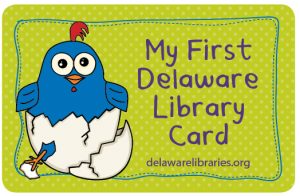
First introduced during the late 80’s library cards would have designs printed onto them. Making it fun to use compared to using plain cards. Now there would be a variety of graphic designs, logos, photography, and characters. Delaware Libraries offer multiple designs for anyone of all ages. Children from birth to age 5 can be able to get their very first library card. They will of course be able to get the Baby Blue Hen design as well as a growth chart and tracker stickers, with the limit of checking out 12 items. For kids ages 6-12 they’ll be able to get superhero designs, with also the limit of checking out 12 items. While teens ages 13-17 get a fun but mature design with the limit of checking out 25 items. When signing up they get a pocket folder and bookmark to be able to decorate and color them the way they want. There are no fines for overdue material for these cards. Children under the age of 18 must have a parent or guardian with them when signing up for a card. Adults can choose between 5 designs and sign up online or in person with a photo ID. Non-residents without a residential status may apply for a non-resident card for a small fee.
Library cards can grant you access to many resources that we have to offer for free. Get access to all eMedia, eMagazines, our large selection of books, DVDs, audiobooks, music CDs and online resources. Get the mobile app and use your card right away without having to wait to go to the library. Visit the Delaware library’s website to sign up today.